
Dec 15, 2025
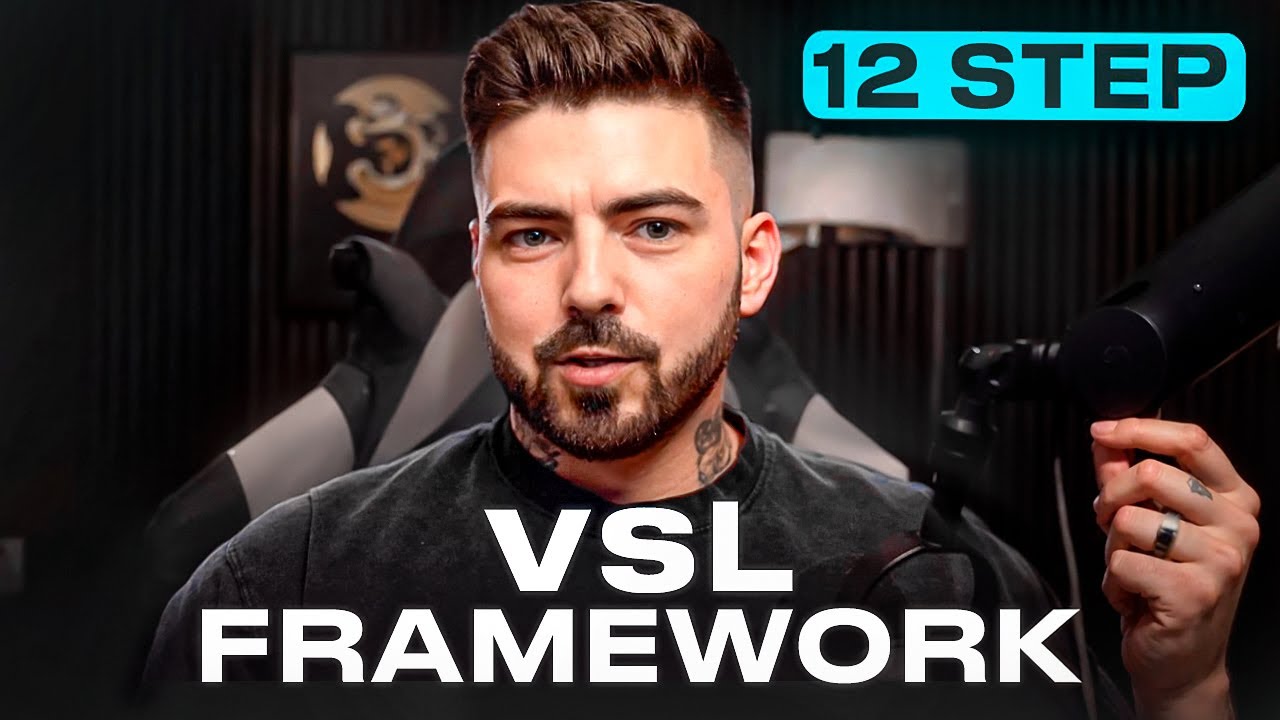
How to Write a High-Converting VSL in Just 12 Steps
I'm Michael Kelly, founder of Scale Your Offers. We help coaches and course creators turn their expertise into sales. And one of the most powerful tools in your arsenal is the video sales letter.
A VSL is your sales pitch on steroids. A high-octane marketing video that combines persuasive copy with visuals to sell a coaching program, a course, or get people to book a call.
When you nail this, it's a game changer.
We put a VSL on one client's sales page and boosted conversions by 43%. Another client is booking calls at $45 each from their VSL right now. These numbers come from following a specific structure.
Here are the 12 components that make a VSL convert.
Why VSLs Work
VSLs let you make a real connection with your audience. They prove you know your stuff. They break down complex ideas into bite-sized chunks while shifting perspectives, handling objections, and guiding prospects to an emotional state that's ready to buy.
Done right, they skyrocket your conversion rates.
Direct vs. Indirect Leads
Before diving into the 12 components, you need to understand the two main approaches to opening a VSL.
Indirect Lead: Starts with a story, stat, or question before getting to the meat of the VSL. Perfect for cold audiences or when you need to build mystery and pull them in.
Example: "97% of online courses gather dust, never completed. Crazy, right? I'm Jane Smith, and I've spent a decade figuring out why some online learners crush it while others crash and burn."
Direct Lead: All business. Jump straight into the problem and solution. Use this for warmer audiences or when the problem is obvious and the market is sophisticated.
Example: "Want to know how we generate 10+ clients at a 3X ROAS for coaches and course creators? I'm Michael Kelly, and I'm here to introduce the Client Attraction Mastery—the bulletproof system for pulling in high-paying clients."
The indirect lead uses a pattern interrupt to pull them in. The direct lead gets straight to the point. Choose based on your audience's awareness level.
The 12 Components
Component 1: Attention-Grabbing Opening
Start strong. You can make a bold promise, show proof, tell a story, or ask a question that hits home for your target audience.
Your opening determines whether anyone watches the rest. Make it count.
Component 2: Identify the Problem
Spell out the challenge your audience is facing. Make it real for them. Describe it in their language. Show them you understand exactly what they're going through.
Component 3: Twist the Knife
Don't hold back. Use hard facts, examples, and stories that drive home why this problem needs fixing right now.
Agitate the pain. Make staying in their current situation feel unbearable. This creates the emotional urgency that drives action.
Component 4: Present the Solution
Highlight the benefits and why your solution is the best option available.
Think of yourself as a lawyer arguing a case. By the time they finish watching, there should be no other option in their mind but to take the next step. Make it an absolute no-brainer.
Component 5: Establish Authority
Flex a little. Share your experience, qualifications, and why you're the go-to expert.
But don't go overboard. Good copy focuses on what's in it for them, not your ego. Establish authority in a way that makes them feel confident your background is exactly why this solution will work for them.
Component 6: Break It Down
Walk them through your program. What can they expect? Address potential doubts head-on.
Go deep here, but stay benefit-driven. Nobody cares if there are 17 modules and 38 videos. People care about what it's going to do for them.
Example: "In Module 1, you're going to learn a super simple way to write VSLs that actually crush. In Module 2, I'll show you how to produce high-level VSLs because just writing the script isn't enough—you need to understand the production that goes into them."
Stack one benefit after another. Paint the picture of what they'll be able to do after going through the program.
Component 7: Testimonials
Let your success stories do the heavy lifting. Share testimonials that pack a punch.
Be careful here. The FTC requires testimonials that are recent and represent average results. You can't just use testimonials of people making millions. Include smaller wins too so results feel realistic and relatable.
If you're selling to people who've never started a business, testimonials from people who went from six figures to eight figures won't resonate. Match your social proof to your audience's current situation.
Component 8: Call to Action #1
Make your move. Lay out what's included and how to sign up.
This is your first call to action. Make it clear and compelling.
Component 9: Remove All Risk
Offer a guarantee. Risk reversal takes away almost any reason for them to say no.
They get to try it out for 7 to 30 days. Some of our clients offer 60-day guarantees. This removes the fear of parting with hard-earned money and lets them experience the value before fully committing.
Component 10: Double Down
Recap the benefits. Remind them it's risk-free. Make it a complete no-brainer.
Restate what they're getting throughout the program or from attending the call. Focus on logical reasoning here instead of emotional reasoning. Give them the rational justification for the decision they're already emotionally ready to make.
Component 11: Create Urgency
Light a fire. Limited spots. Time running out. Remind them what they're losing by not acting.
These create pressure, especially for limited-time bonuses or limited-enrollment programs. The urgency needs to be real. If you say 20 spots, only offer 20 spots.
Component 12: Final CTA
Last call. This is CTA number three.
Make a final push. Hit them with emotion. Make them feel the FOMO of missing out on something that could change their situation.
Keeping Your Audience Locked In
If your audience doesn't stay engaged, nothing else matters. They won't see your offer, testimonials, or guarantee.
Use pattern interrupts to keep them on their toes. Throw in visuals, graphics, and text overlays. Keep the pace moving. No one wants to watch paint dry.
Master storytelling. Weave a narrative throughout your VSL. Think of it as a hero's journey with your client as the hero and you as the mentor who's been there and done that.
Visuals matter. High-quality audio is non-negotiable. Video quality can be simpler—you sitting in a clean space works fine—but bad audio kills credibility instantly.
Highlight key points on screen. Use text to reinforce stats and important information. Viewers retain more when they see and hear the same message.
Testing and Iteration
Your first shot is never your best shot.
Create different versions. Test different openings, CTAs, and everything in between. Use data to track what's working. A/B test until you find what hits home with your audience.
You may even rearrange some of these 12 components based on what your specific audience responds to. The framework is a starting point. Testing reveals what actually converts.
The Essentials
A powerful opening and clear problem statement are make or break.
Social proof and multiple CTAs turn viewers into buyers.
Create urgency and tackle objections before they arise in the viewer's mind.
Your VSL isn't just about making a sale. It's about connecting, teaching, and solving real problems. Nail that, and the sales follow.
Frequently Asked Questions
What is a VSL in marketing?
A VSL (video sales letter) is a marketing video that combines persuasive copy with visuals to sell a product or service. It guides viewers through an awareness journey, addresses objections, builds desire, and drives them toward a specific action like purchasing a course or booking a call.
How long should a VSL be?
VSL length depends on offer complexity and price point. Most effective VSLs run between 10 and 25 minutes. Higher-ticket offers typically require longer VSLs to build trust and handle more objections. The key is keeping viewers engaged throughout, not hitting a specific time target.
What's the difference between a direct and indirect lead?
A direct lead jumps straight into the problem and solution. Use it for warm audiences who already understand their problem. An indirect lead starts with a story, statistic, or question to build intrigue. Use it for cold audiences who need to be pulled in before you present your offer.
How many CTAs should a VSL have?
Most high-converting VSLs include three calls to action. The first CTA comes after presenting the solution and breaking down the offer. The second follows the risk reversal and benefit recap. The third is your final push with urgency and emotional appeal. Multiple CTAs give viewers several opportunities to act.
Should I include testimonials in my VSL?
Yes, when they're relatable to your target audience. Testimonials from people in similar situations to your prospects build trust and credibility. Avoid using only extreme success stories. The FTC requires testimonials to represent typical results, so include a range of outcomes.
How do I create urgency without fake scarcity?
Tie urgency to real constraints. Limited enrollment capacity. Actual bonus expiration dates. Price increases at specific times. Remind viewers what they lose by waiting—continued struggle with the problem you solve. Authentic urgency comes from real consequences, not manufactured countdown timers you'll reset anyway.
What makes a VSL opening effective?
An effective opening either makes a bold promise, shows compelling proof, tells a relatable story, or asks a question that resonates with the target audience's situation. The opening must hook viewers immediately because it determines whether they watch the rest. Test multiple openings to find what works best for your audience.
Hire Us to Write and Produce Your VSL
Writing a VSL that converts takes understanding the framework, knowing your audience, and testing until you find what works. Our team handles all of it: the research, the script, the structure, and the strategic production guidance.
We've written VSLs that book calls at $45 each and boost sales page conversions by 43%. Our focus is your revenue. If the VSL doesn't convert, we haven't done our job.




1722 Diane St. Spring Hill, FL 34609
2026 © Ads and Funnels LLC, All Right Reserved
1722 Diane St. Spring Hill, FL 34609
2026 © Ads and Funnels LLC, All Right Reserved
1722 Diane St. Spring Hill, FL 34609
2026 © Ads and Funnels LLC, All Right Reserved
Dec 15, 2025
How to Write a High-Converting VSL in Just 12 Steps
I'm Michael Kelly, founder of Scale Your Offers. We help coaches and course creators turn their expertise into sales. And one of the most powerful tools in your arsenal is the video sales letter.
A VSL is your sales pitch on steroids. A high-octane marketing video that combines persuasive copy with visuals to sell a coaching program, a course, or get people to book a call.
When you nail this, it's a game changer.
We put a VSL on one client's sales page and boosted conversions by 43%. Another client is booking calls at $45 each from their VSL right now. These numbers come from following a specific structure.
Here are the 12 components that make a VSL convert.
Why VSLs Work
VSLs let you make a real connection with your audience. They prove you know your stuff. They break down complex ideas into bite-sized chunks while shifting perspectives, handling objections, and guiding prospects to an emotional state that's ready to buy.
Done right, they skyrocket your conversion rates.
Direct vs. Indirect Leads
Before diving into the 12 components, you need to understand the two main approaches to opening a VSL.
Indirect Lead: Starts with a story, stat, or question before getting to the meat of the VSL. Perfect for cold audiences or when you need to build mystery and pull them in.
Example: "97% of online courses gather dust, never completed. Crazy, right? I'm Jane Smith, and I've spent a decade figuring out why some online learners crush it while others crash and burn."
Direct Lead: All business. Jump straight into the problem and solution. Use this for warmer audiences or when the problem is obvious and the market is sophisticated.
Example: "Want to know how we generate 10+ clients at a 3X ROAS for coaches and course creators? I'm Michael Kelly, and I'm here to introduce the Client Attraction Mastery—the bulletproof system for pulling in high-paying clients."
The indirect lead uses a pattern interrupt to pull them in. The direct lead gets straight to the point. Choose based on your audience's awareness level.
The 12 Components
Component 1: Attention-Grabbing Opening
Start strong. You can make a bold promise, show proof, tell a story, or ask a question that hits home for your target audience.
Your opening determines whether anyone watches the rest. Make it count.
Component 2: Identify the Problem
Spell out the challenge your audience is facing. Make it real for them. Describe it in their language. Show them you understand exactly what they're going through.
Component 3: Twist the Knife
Don't hold back. Use hard facts, examples, and stories that drive home why this problem needs fixing right now.
Agitate the pain. Make staying in their current situation feel unbearable. This creates the emotional urgency that drives action.
Component 4: Present the Solution
Highlight the benefits and why your solution is the best option available.
Think of yourself as a lawyer arguing a case. By the time they finish watching, there should be no other option in their mind but to take the next step. Make it an absolute no-brainer.
Component 5: Establish Authority
Flex a little. Share your experience, qualifications, and why you're the go-to expert.
But don't go overboard. Good copy focuses on what's in it for them, not your ego. Establish authority in a way that makes them feel confident your background is exactly why this solution will work for them.
Component 6: Break It Down
Walk them through your program. What can they expect? Address potential doubts head-on.
Go deep here, but stay benefit-driven. Nobody cares if there are 17 modules and 38 videos. People care about what it's going to do for them.
Example: "In Module 1, you're going to learn a super simple way to write VSLs that actually crush. In Module 2, I'll show you how to produce high-level VSLs because just writing the script isn't enough—you need to understand the production that goes into them."
Stack one benefit after another. Paint the picture of what they'll be able to do after going through the program.
Component 7: Testimonials
Let your success stories do the heavy lifting. Share testimonials that pack a punch.
Be careful here. The FTC requires testimonials that are recent and represent average results. You can't just use testimonials of people making millions. Include smaller wins too so results feel realistic and relatable.
If you're selling to people who've never started a business, testimonials from people who went from six figures to eight figures won't resonate. Match your social proof to your audience's current situation.
Component 8: Call to Action #1
Make your move. Lay out what's included and how to sign up.
This is your first call to action. Make it clear and compelling.
Component 9: Remove All Risk
Offer a guarantee. Risk reversal takes away almost any reason for them to say no.
They get to try it out for 7 to 30 days. Some of our clients offer 60-day guarantees. This removes the fear of parting with hard-earned money and lets them experience the value before fully committing.
Component 10: Double Down
Recap the benefits. Remind them it's risk-free. Make it a complete no-brainer.
Restate what they're getting throughout the program or from attending the call. Focus on logical reasoning here instead of emotional reasoning. Give them the rational justification for the decision they're already emotionally ready to make.
Component 11: Create Urgency
Light a fire. Limited spots. Time running out. Remind them what they're losing by not acting.
These create pressure, especially for limited-time bonuses or limited-enrollment programs. The urgency needs to be real. If you say 20 spots, only offer 20 spots.
Component 12: Final CTA
Last call. This is CTA number three.
Make a final push. Hit them with emotion. Make them feel the FOMO of missing out on something that could change their situation.
Keeping Your Audience Locked In
If your audience doesn't stay engaged, nothing else matters. They won't see your offer, testimonials, or guarantee.
Use pattern interrupts to keep them on their toes. Throw in visuals, graphics, and text overlays. Keep the pace moving. No one wants to watch paint dry.
Master storytelling. Weave a narrative throughout your VSL. Think of it as a hero's journey with your client as the hero and you as the mentor who's been there and done that.
Visuals matter. High-quality audio is non-negotiable. Video quality can be simpler—you sitting in a clean space works fine—but bad audio kills credibility instantly.
Highlight key points on screen. Use text to reinforce stats and important information. Viewers retain more when they see and hear the same message.
Testing and Iteration
Your first shot is never your best shot.
Create different versions. Test different openings, CTAs, and everything in between. Use data to track what's working. A/B test until you find what hits home with your audience.
You may even rearrange some of these 12 components based on what your specific audience responds to. The framework is a starting point. Testing reveals what actually converts.
The Essentials
A powerful opening and clear problem statement are make or break.
Social proof and multiple CTAs turn viewers into buyers.
Create urgency and tackle objections before they arise in the viewer's mind.
Your VSL isn't just about making a sale. It's about connecting, teaching, and solving real problems. Nail that, and the sales follow.
Frequently Asked Questions
What is a VSL in marketing?
A VSL (video sales letter) is a marketing video that combines persuasive copy with visuals to sell a product or service. It guides viewers through an awareness journey, addresses objections, builds desire, and drives them toward a specific action like purchasing a course or booking a call.
How long should a VSL be?
VSL length depends on offer complexity and price point. Most effective VSLs run between 10 and 25 minutes. Higher-ticket offers typically require longer VSLs to build trust and handle more objections. The key is keeping viewers engaged throughout, not hitting a specific time target.
What's the difference between a direct and indirect lead?
A direct lead jumps straight into the problem and solution. Use it for warm audiences who already understand their problem. An indirect lead starts with a story, statistic, or question to build intrigue. Use it for cold audiences who need to be pulled in before you present your offer.
How many CTAs should a VSL have?
Most high-converting VSLs include three calls to action. The first CTA comes after presenting the solution and breaking down the offer. The second follows the risk reversal and benefit recap. The third is your final push with urgency and emotional appeal. Multiple CTAs give viewers several opportunities to act.
Should I include testimonials in my VSL?
Yes, when they're relatable to your target audience. Testimonials from people in similar situations to your prospects build trust and credibility. Avoid using only extreme success stories. The FTC requires testimonials to represent typical results, so include a range of outcomes.
How do I create urgency without fake scarcity?
Tie urgency to real constraints. Limited enrollment capacity. Actual bonus expiration dates. Price increases at specific times. Remind viewers what they lose by waiting—continued struggle with the problem you solve. Authentic urgency comes from real consequences, not manufactured countdown timers you'll reset anyway.
What makes a VSL opening effective?
An effective opening either makes a bold promise, shows compelling proof, tells a relatable story, or asks a question that resonates with the target audience's situation. The opening must hook viewers immediately because it determines whether they watch the rest. Test multiple openings to find what works best for your audience.
Hire Us to Write and Produce Your VSL
Writing a VSL that converts takes understanding the framework, knowing your audience, and testing until you find what works. Our team handles all of it: the research, the script, the structure, and the strategic production guidance.
We've written VSLs that book calls at $45 each and boost sales page conversions by 43%. Our focus is your revenue. If the VSL doesn't convert, we haven't done our job.
1722 Diane St. Spring Hill, FL 34609
2026 © Ads and Funnels LLC, All Right Reserved