
Dec 18, 2025
How We Generated $500,000 in 10 Days with a 5-Day Challenge (No Ad Spend)
$500,000 from a single launch. 30 days total. No ad spend. No organic content marketing campaign.
All we had was an email list of about 22,000 people and a simple funnel: opt-in page, thank you page, Facebook group.
I'm Michael Kelly, founder of Scale Your Offers. I'm going to show you exactly how we did it.
The Launch Structure
We ran a free 5-day challenge for a print-on-demand company that teaches everyday people how to start their own apparel brands.
The funnel was simple. We pushed the email list to a Facebook group using a 10-part email series. Six original emails, then resends with different subject lines to non-openers.
For the first three and a half days, every email drove toward one action: apply to join the Facebook group. People would submit an opt-in form, land on a confirmation page, then request access to the group.
The final emails shifted tone: "The training is starting. You need to get in here. If you're not in, you're going to miss out."
Then we moved into the actual training.
The 5-Day Challenge Breakdown
A 5-day challenge takes someone from where they are to where they need to be in order to make the next logical step: purchasing whatever you're selling on the back end.
Here's what each day covered:
Day 1: Introducing the new opportunity. In this case, how to start an apparel brand.
Day 2: How to research and find winning products.
Day 3: How to create a Shopify store that actually converts.
Day 4: How to run ads for your Shopify store to generate the right traffic.
Day 5: How to leverage AI to automate 90% of your business.
After the five days, we gave participants 24 hours to rewatch the content before closing the group and opening up the next offer.
The Offer and Results
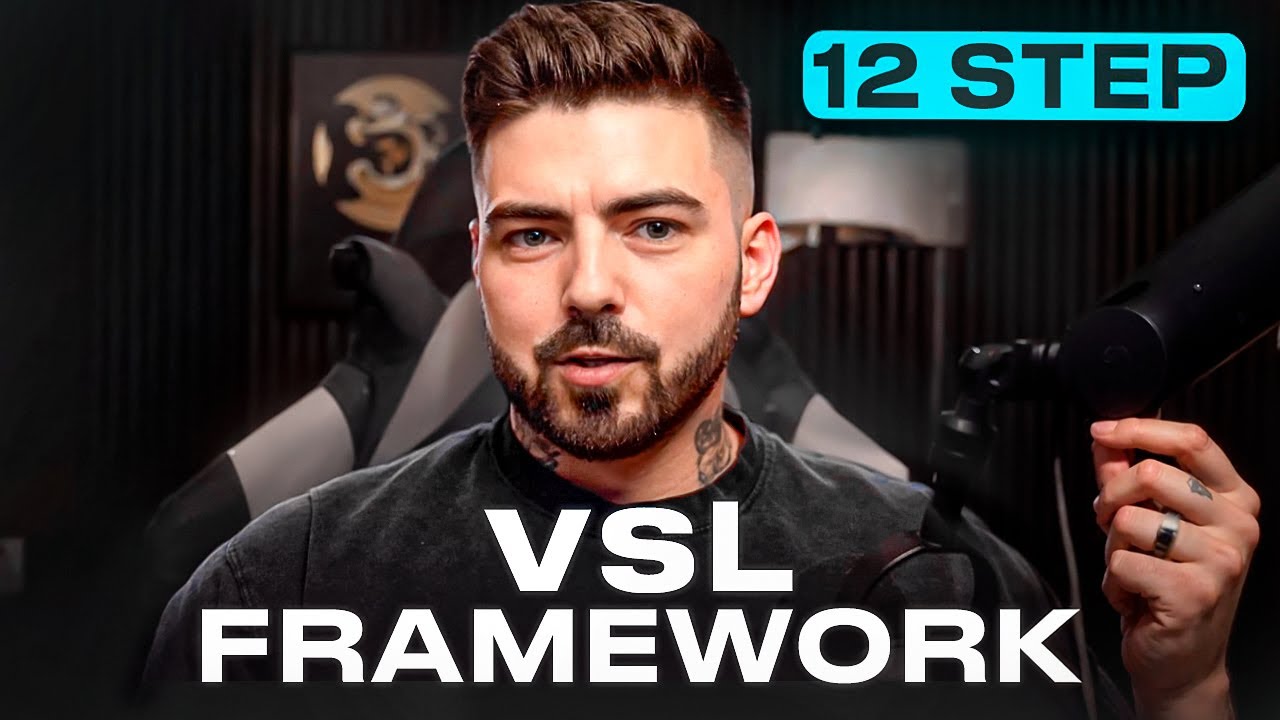
We released a 22-minute video sales letter that opened applications for a $12,000 offer.
56 applications came in. We only had 20 spots available in the initial offer.
The overflow got downsold into two other programs: a lighter version of the main offer with some done-for-you elements removed, and a separate $6,000 program.
Total revenue from email list open to applications closed: $500,000 in 10 days.
What Made This Challenge Different
For most of our clients, we run live event launches. The client shows up live every day for three to five hours over two or three days.
This challenge worked differently. The client filmed one video each morning. Each session ran 20 to 30 minutes. Total daily commitment was a fraction of a typical live launch.
The content stayed extremely actionable. Participants created their store names, designed logos, set up Shopify stores, researched products, and started implementing AI tools. Every day produced tangible progress.
Here's what made the social proof compound: the client showed their own store's sales numbers from the previous day. Each morning, they stacked more evidence on top of what came before. By day five, the proof was undeniable.
The Money Already in Your List
You might think a 22,000 person email list is large. In paid traffic terms, you could reach 22,000 people in a day with enough budget.
The difference: this list already had a relationship with the brand. They'd been receiving emails. They knew the company. They trusted the source.
Before this launch, the client didn't think there was money left in their list. They'd been running book-a-call emails, workshop invitations, and standard promotional sequences.
The challenge proved them wrong. $500,000 sat in that list, waiting for the right offer presented in the right way.
Three Takeaways from This Launch
Takeaway One: There's Money in Your List
Showing up in a different way than your audience expects can unlock revenue you didn't know existed. This list had seen plenty of promotions. They hadn't seen a 5-day challenge with daily actionable content. The format change created new engagement.
Takeaway Two: Warm Traffic Before Cold Traffic
The instinct when sales slow down is to spend more on ads. Run more cold traffic. Generate more leads.
Sometimes the better move is to re-engage the people who already know you. They've opted in. They've received your emails. They've shown interest. Converting warm traffic costs less and converts higher than starting from zero with strangers.
Takeaway Three: Your Audience Wants to Buy in Different Ways
This company had been selling print-on-demand jewelry training. The challenge offered print-on-demand apparel training.
Same audience. Same relationship. Different angle.
The people who didn't buy the jewelry offer bought the apparel offer. They wanted to purchase. They just needed an offer that matched their specific interest.
The Funnel Recap
Here's the complete structure:
Email Sequence: 10 emails over the pre-launch period. Six originals, four resends to non-openers. All driving to the Facebook group application.
Facebook Group: Where the challenge lived. Participants applied, got accepted, and consumed content inside the group.
5-Day Challenge: 20-30 minute daily videos. Actionable content. Compounding social proof.
24-Hour Buffer: Time to rewatch before the group closed and the offer opened.
22-Minute VSL: Presented the $12,000 offer and opened applications.
Application Process: 56 applications for 20 spots. Overflow downsold into lighter programs.
Result: $500,000 in 10 days.
This challenge now runs quarterly. The asset keeps producing.
Frequently Asked Questions
How big does my email list need to be for a challenge launch?
This launch used a 22,000 person email list to generate $500,000. List size matters less than list quality and relationship depth. A smaller, engaged list can outperform a larger, cold list. The key factors are how recently subscribers joined, how consistently you've emailed them, and how relevant your challenge topic is to their interests.
How long should a 5-day challenge video be?
This challenge used 20-30 minute daily videos. Traditional challenges often run 60 minutes per day. Shorter, more actionable content can outperform longer sessions because participants can actually complete the work. The goal is giving people enough to make real progress without overwhelming them.
What should each day of a 5-day challenge cover?
Structure your challenge to take participants through an awareness journey that prepares them for your offer. Day one introduces the opportunity. Days two through four teach specific skills or strategies. Day five shows how to scale or systematize. Each day should include actionable tasks participants can complete before the next session.
How do I handle more applications than available spots?
Create downsell offers at different price points. When this launch received 56 applications for 20 spots, overflow applicants were offered a lighter version of the main program (with some done-for-you elements removed) or an alternative $6,000 program. Having downsell paths captures revenue that would otherwise be lost.
Should I run my challenge live or pre-recorded?
Pre-recorded challenges require less daily time commitment and allow for better production quality. Live challenges create urgency and allow real-time interaction. This launch used daily pre-recorded videos that still felt timely because the presenter shared previous day sales data. The hybrid approach captured benefits of both formats.
How do I build social proof during a challenge?
Show results as they happen. In this launch, the presenter displayed their store's sales numbers from the previous day during each morning's video. Proof compounded daily. By day five, participants had seen consistent evidence across the entire challenge. Stack proof throughout rather than saving it all for the pitch.
How often should I run a challenge launch?
This company now runs the challenge quarterly. Frequency depends on your audience size and growth rate. Running too often fatigues your list. Running too rarely leaves money on the table. Quarterly launches allow time to grow the list between events while maintaining a predictable revenue cycle.
Ready to Launch Your Challenge?
At Scale Your Offers, we build challenge funnels, email sequences, and VSLs that convert warm audiences into buyers. Our focus is client revenue. If we're not generating results, we're not doing our job.





1722 Diane St. Spring Hill, FL 34609
2026 © Ads and Funnels LLC, All Right Reserved
1722 Diane St. Spring Hill, FL 34609
2026 © Ads and Funnels LLC, All Right Reserved
1722 Diane St. Spring Hill, FL 34609
2026 © Ads and Funnels LLC, All Right Reserved
Dec 18, 2025
How We Generated $500,000 in 10 Days with a 5-Day Challenge (No Ad Spend)
$500,000 from a single launch. 30 days total. No ad spend. No organic content marketing campaign.
All we had was an email list of about 22,000 people and a simple funnel: opt-in page, thank you page, Facebook group.
I'm Michael Kelly, founder of Scale Your Offers. I'm going to show you exactly how we did it.
The Launch Structure
We ran a free 5-day challenge for a print-on-demand company that teaches everyday people how to start their own apparel brands.
The funnel was simple. We pushed the email list to a Facebook group using a 10-part email series. Six original emails, then resends with different subject lines to non-openers.
For the first three and a half days, every email drove toward one action: apply to join the Facebook group. People would submit an opt-in form, land on a confirmation page, then request access to the group.
The final emails shifted tone: "The training is starting. You need to get in here. If you're not in, you're going to miss out."
Then we moved into the actual training.
The 5-Day Challenge Breakdown
A 5-day challenge takes someone from where they are to where they need to be in order to make the next logical step: purchasing whatever you're selling on the back end.
Here's what each day covered:
Day 1: Introducing the new opportunity. In this case, how to start an apparel brand.
Day 2: How to research and find winning products.
Day 3: How to create a Shopify store that actually converts.
Day 4: How to run ads for your Shopify store to generate the right traffic.
Day 5: How to leverage AI to automate 90% of your business.
After the five days, we gave participants 24 hours to rewatch the content before closing the group and opening up the next offer.
The Offer and Results
We released a 22-minute video sales letter that opened applications for a $12,000 offer.
56 applications came in. We only had 20 spots available in the initial offer.
The overflow got downsold into two other programs: a lighter version of the main offer with some done-for-you elements removed, and a separate $6,000 program.
Total revenue from email list open to applications closed: $500,000 in 10 days.
What Made This Challenge Different
For most of our clients, we run live event launches. The client shows up live every day for three to five hours over two or three days.
This challenge worked differently. The client filmed one video each morning. Each session ran 20 to 30 minutes. Total daily commitment was a fraction of a typical live launch.
The content stayed extremely actionable. Participants created their store names, designed logos, set up Shopify stores, researched products, and started implementing AI tools. Every day produced tangible progress.
Here's what made the social proof compound: the client showed their own store's sales numbers from the previous day. Each morning, they stacked more evidence on top of what came before. By day five, the proof was undeniable.
The Money Already in Your List
You might think a 22,000 person email list is large. In paid traffic terms, you could reach 22,000 people in a day with enough budget.
The difference: this list already had a relationship with the brand. They'd been receiving emails. They knew the company. They trusted the source.
Before this launch, the client didn't think there was money left in their list. They'd been running book-a-call emails, workshop invitations, and standard promotional sequences.
The challenge proved them wrong. $500,000 sat in that list, waiting for the right offer presented in the right way.
Three Takeaways from This Launch
Takeaway One: There's Money in Your List
Showing up in a different way than your audience expects can unlock revenue you didn't know existed. This list had seen plenty of promotions. They hadn't seen a 5-day challenge with daily actionable content. The format change created new engagement.
Takeaway Two: Warm Traffic Before Cold Traffic
The instinct when sales slow down is to spend more on ads. Run more cold traffic. Generate more leads.
Sometimes the better move is to re-engage the people who already know you. They've opted in. They've received your emails. They've shown interest. Converting warm traffic costs less and converts higher than starting from zero with strangers.
Takeaway Three: Your Audience Wants to Buy in Different Ways
This company had been selling print-on-demand jewelry training. The challenge offered print-on-demand apparel training.
Same audience. Same relationship. Different angle.
The people who didn't buy the jewelry offer bought the apparel offer. They wanted to purchase. They just needed an offer that matched their specific interest.
The Funnel Recap
Here's the complete structure:
Email Sequence: 10 emails over the pre-launch period. Six originals, four resends to non-openers. All driving to the Facebook group application.
Facebook Group: Where the challenge lived. Participants applied, got accepted, and consumed content inside the group.
5-Day Challenge: 20-30 minute daily videos. Actionable content. Compounding social proof.
24-Hour Buffer: Time to rewatch before the group closed and the offer opened.
22-Minute VSL: Presented the $12,000 offer and opened applications.
Application Process: 56 applications for 20 spots. Overflow downsold into lighter programs.
Result: $500,000 in 10 days.
This challenge now runs quarterly. The asset keeps producing.
Frequently Asked Questions
How big does my email list need to be for a challenge launch?
This launch used a 22,000 person email list to generate $500,000. List size matters less than list quality and relationship depth. A smaller, engaged list can outperform a larger, cold list. The key factors are how recently subscribers joined, how consistently you've emailed them, and how relevant your challenge topic is to their interests.
How long should a 5-day challenge video be?
This challenge used 20-30 minute daily videos. Traditional challenges often run 60 minutes per day. Shorter, more actionable content can outperform longer sessions because participants can actually complete the work. The goal is giving people enough to make real progress without overwhelming them.
What should each day of a 5-day challenge cover?
Structure your challenge to take participants through an awareness journey that prepares them for your offer. Day one introduces the opportunity. Days two through four teach specific skills or strategies. Day five shows how to scale or systematize. Each day should include actionable tasks participants can complete before the next session.
How do I handle more applications than available spots?
Create downsell offers at different price points. When this launch received 56 applications for 20 spots, overflow applicants were offered a lighter version of the main program (with some done-for-you elements removed) or an alternative $6,000 program. Having downsell paths captures revenue that would otherwise be lost.
Should I run my challenge live or pre-recorded?
Pre-recorded challenges require less daily time commitment and allow for better production quality. Live challenges create urgency and allow real-time interaction. This launch used daily pre-recorded videos that still felt timely because the presenter shared previous day sales data. The hybrid approach captured benefits of both formats.
How do I build social proof during a challenge?
Show results as they happen. In this launch, the presenter displayed their store's sales numbers from the previous day during each morning's video. Proof compounded daily. By day five, participants had seen consistent evidence across the entire challenge. Stack proof throughout rather than saving it all for the pitch.
How often should I run a challenge launch?
This company now runs the challenge quarterly. Frequency depends on your audience size and growth rate. Running too often fatigues your list. Running too rarely leaves money on the table. Quarterly launches allow time to grow the list between events while maintaining a predictable revenue cycle.
Ready to Launch Your Challenge?
At Scale Your Offers, we build challenge funnels, email sequences, and VSLs that convert warm audiences into buyers. Our focus is client revenue. If we're not generating results, we're not doing our job.
1722 Diane St. Spring Hill, FL 34609
2026 © Ads and Funnels LLC, All Right Reserved